Futures of Work
in the Age of AI
An open call for writing · Closes 31 October 2026
We invite writing that holds tensions open rather than resolving them, and that interrogates the interstices of work.
- Deadline
- 31 Oct 2026
- Length
- ≤ 5,000 words
- Format
- Formatted PDF
- Print launch
- April 2027
PhiAI is open for submissions to our second printed anthology. Anyone, anywhere on Earth can apply. We particularly encourage worker and Global South perspectives.
What does the future of work look like in a world where we automate tasks and augment humans using AI systems?
How do we define human purpose acquired through paid employment?
How do we keep human thinking in the loop and ensure we don’t lose the helm from our hands?
If AI absorbs the tedious work, where does the next generation’s taste come from, and what happens to a profession whose apprenticeship has quietly disappeared?
What does the choice of a profession mean when the horizon collapses to a few years, and is “choose what can’t be automated” wisdom?
What happens to European welfare states when value accrues to capital that employs almost no one — and what would it take to refinance the social contract on a different base?
Care, maintenance, repair — the work that stays stubbornly human has also stayed stubbornly underpaid. Does AI close that gap or widen it?
We welcome
pieces focused on
- 01Redefining identity through different modes of work
- 02Creative fiction of future worlds where humans work alongside intelligent systems
- 03Policy levers and economic interventions to support a new model of work
- 04What ant colonies, mycelial networks and flocks already know about distributed labour, and what that means for how humans and machines might work together
- 05…and anything else related
Imagine what a Working Future might look like.
We accept any form of text: a policy paper and a poem can sit in the same collection if both take the question seriously.
Any form of text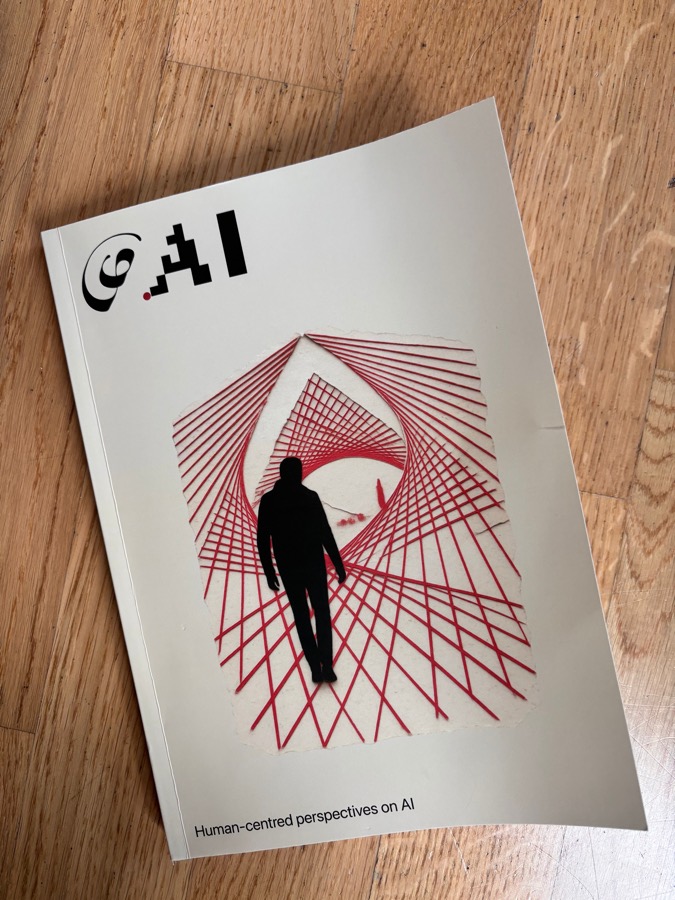
We have done
this before
Issue I collected eighteen pieces from twelve writers across philosophy, anthropology, economics, law and education sciences — printed, bound and shipped to readers. Issue II is the same undertaking with a single theme.
- Writers
- 12
- Status
- Shipping
- Issue
- I
Specification
On using AI
We encourage AI tools for research, grammar, referencing and supporting content. The final work should be drafted by you, in your own voice. If you go further, say so clearly on the form and at the top of your submission.
On selection
Every piece is read and selected by humans. Shortlisted pieces are invited into a thorough editorial review of up to three rounds before final confirmation. It may still happen that a piece is not selected after the third round.
You become a
Guest Writer
Your piece appears in the printed anthology and on the PhiAI Substack, you join the PhiAI community, and you are invited to a showcase and networking event.
Questions? hello@phiand.ai
Deadline is midnight, anywhere on the planet.
Before
you send
Anyone, anywhere. You do not need to have published before or to have academic credentials. We particularly welcome worker and Global South perspectives.
Use it for research, grammar, referencing and supporting content. The final piece should be drafted by you, in your own voice. If you have gone further, say so clearly on the form and at the top of your submission.
No. We accept any form of text: philosophical enquiry, creative fiction, future scenarios, policy papers, dialogue, poetry, word art, personal experience. The theme matters more than the form.
Because the anthology is printed. A formatted PDF shows us your images, diagrams and layout as you intend them on the page. If shortlisted, we will invite you to collaborate in a Google Doc for the editorial review.
You join the PhiAI community as a Guest Writer, your piece appears in the printed anthology and on the PhiAI Substack, and you are invited to a showcase and networking event. Details closer to the date.
Submissions are reviewed through November 2026, and shortlisted writers hear from us in early December. Shortlisted pieces then go through an editorial review of up to three rounds, with final confirmation at the end of that process.
We would like
to read you
Submissions close 31 October 2026, midnight anywhere on the planet.
Submit your work →Opens the submission form in a new tab